


Business Cards in the Modern Marketing Mix
Explore why business cards remain valuable in modern marketing and how materials, finishes and production choices shape their impact.
Business cards remain one of the most practical and personal tools in the modern marketing mix.
In this article
Explore why business cards remain valuable in modern marketing and how materials, finishes and production choices shape their impact.
Digital communication is fast and convenient, but a well-produced card creates a physical connection. It gives customers and contacts something tangible to remember and can communicate quality before a conversation has even finished.
Why Business Cards Still Matter
A business card can support networking, sales and brand recognition.
- It provides contact information immediately.
- It reinforces a company's visual identity.
- It creates a physical reminder after a meeting.
- It can communicate quality through material, finish and design.
- It works alongside digital channels rather than competing with them.
QR codes and short web addresses can connect a printed card directly to online content, booking pages, portfolios or social channels.
Business Card Styles
Standard Business Cards
Standard cards are versatile, practical and suitable for most professional uses. Their effectiveness depends on clear design, good typography and appropriate stock.
Folded Business Cards
Folded cards create additional space for services, opening hours, appointment details or product information while retaining a compact format.
Raised Spot UV Business Cards
Raised Spot UV adds texture and contrast to selected design elements. It works particularly well for logos, patterns and typography.
Raised Foil Business Cards
Raised foil combines tactile height with a metallic finish. It can create a premium result when used selectively and supported by a strong, uncluttered design.
Laminated and Uncoated Options
Gloss lamination adds shine and strengthens colour. Matt lamination creates a smoother, more restrained finish, while soft-touch lamination adds a velvety premium feel.
Uncoated cards provide a natural texture and are easy to write on. They can be particularly effective for brands that value simplicity, authenticity or a less polished aesthetic.
Uncoated stocks may also be easier to recycle than heavily laminated alternatives, depending on the material and local recycling facilities.
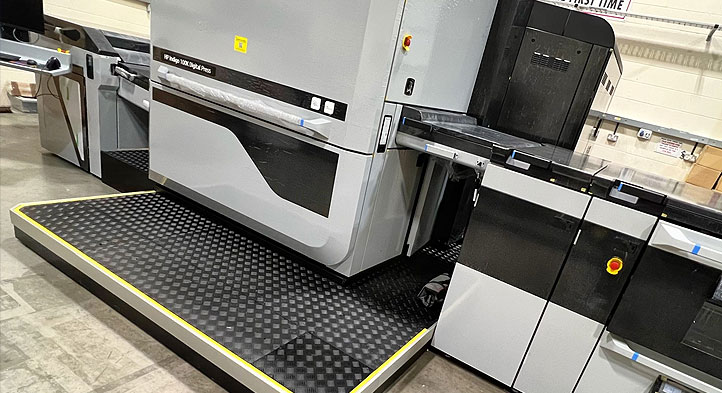
How Flexpress Produces Business Cards
HP Indigo 100K Digital Printing
The HP Indigo 100K produces sharp detail, consistent colour and high-quality digital print at speed.
High-Speed Lamination
Printed sheets can be laminated in gloss, matt or soft-touch finishes to improve durability and create the required tactile effect.
Raised Spot UV and Foil
The Duplo DuSense DDC-8000 digitally applies raised Spot UV and metallic foil to selected areas without the need for traditional dies.
Automated Cutting
The Duplo DC-20K cuts, slits and creases printed sheets with high accuracy, helping ensure consistency across every batch.
Packaging and Quality Control
Finished cards are checked before dispatch and packed securely in recyclable cardboard boxes wherever practical.
Conclusion
Business cards continue to earn their place in modern marketing because they combine information, design and physical experience.
The best results come from matching the stock, finish and production method to the brand. Whether the chosen style is understated and uncoated or enhanced with raised foil and Spot UV, a well-made card can turn a brief introduction into a lasting impression.