


A Greener Tomorrow for the UK Print Industry
Discover how responsible materials, energy-efficient equipment and practical production choices can support a more sustainable UK print industry.
Welcome to the world of printing, where innovation meets sustainability.
In this article
Discover how responsible materials, energy-efficient equipment and practical production choices can support a more sustainable UK print industry.
At Flexpress, producing strong print is only part of our responsibility. We are also working towards a future in which print production uses resources more carefully, reduces unnecessary waste and supports environmentally responsible choices.
The Environmental Impact of Printing
Printing has traditionally faced environmental challenges linked to energy use, paper waste, ink production, equipment manufacture and transport.
The industry is changing. New technologies, better materials and more thoughtful production practices are creating a more sustainable path forward.
FSC-certified paper is an important part of that progress. It helps ensure that paper comes from responsibly managed forests that deliver environmental, social and economic benefits.
Understanding Print's Wider Footprint
Environmental impact extends beyond paper.
- Traditional drying and curing methods can consume significant energy.
- Some conventional inks contain chemicals and volatile organic compounds.
- Manufacturing printing equipment requires metals, plastics and electronic components.
- Misprints, excess stock and unused materials can create avoidable waste.
Effective recycling, careful planning and efficient production all help reduce this footprint.
Flexpress's Journey Towards Sustainability
Flexpress has invested in practical measures to reduce its environmental impact.
Solar panels installed on our factory roof reduce reliance on non-renewable electricity. Our electric delivery vehicle also helps lower emissions associated with local transport.
These measures are part of a wider commitment to responsible manufacturing and continuous improvement.
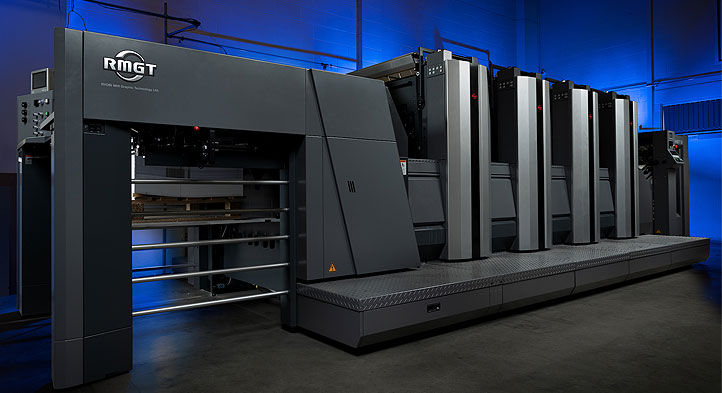
LED UV Litho Printing
Our RMGT 924 LED UV lithographic press supports longer-run booklet, brochure and folder production while offering important environmental advantages.
- LED UV curing can use considerably less energy than conventional drying systems.
- The technology does not generate ozone in the way traditional UV systems can.
- LED lamps last longer and require fewer replacements.
- Instant curing reduces smudging, set-off and avoidable print waste.
Better curing efficiency supports both print quality and more responsible production.
The HP Indigo 100K
The HP Indigo 100K digital press combines speed, print quality and material efficiency.
Its efficient setup helps minimise waste, particularly on shorter and personalised runs. Many jobs require only one or two additional setup sheets, avoiding the larger makeready quantities associated with some traditional processes.
The press also supports a wide range of recycled and FSC-certified materials.
HP operates a recycling programme for consumables used by Indigo customers, including empty ink containers, excess oil and other eligible materials.
Practical Steps for More Responsible Print
Printers, designers and print buyers can all contribute.
- Choose recycled or FSC-certified paper.
- Use energy-efficient printing technologies.
- Plan jobs carefully to minimise paper and ink waste.
- Order realistic quantities rather than printing excess stock.
- Use UK-based suppliers when this avoids unnecessary international transport.
- Explain sustainable options clearly to customers.
- Keep reviewing new materials and production methods.
Digital printing makes it easier to order only what is needed. This can reduce storage, transport and the risk of obsolete stock when details change.
Conclusion
Sustainable printing depends on a series of practical decisions rather than a single solution.
Renewable energy, electric transport, LED UV lithography, efficient digital printing, responsible paper and careful waste management all contribute to a better outcome.
Print can remain creative, effective and commercially valuable while becoming more responsible. Together, printers, designers and customers can help build a greener future for the industry.