


Choosing the Right Paper for Books and Booklets
Learn how GSM, coating, lamination, sustainability, cost and book type influence the choice of paper for books and booklets.
Choosing paper is one of the most important decisions in book and booklet production.
In this article
Learn how GSM, coating, lamination, sustainability, cost and book type influence the choice of paper for books and booklets.
The selected stock affects readability, image quality, durability, weight, cost and environmental impact.
Understanding Paper Weight
GSM means grams per square metre and is the standard measurement used for paper weight in the UK.
Higher GSM generally means a thicker and more substantial sheet, although bulk and stiffness can vary between paper ranges.
Lightweight Paper: 60–100 GSM
Lightweight uncoated paper is commonly used for novels and text-heavy books where portability and cost are important.
Medium Paper: 120–170 GSM
Medium-weight stocks suit booklets, magazines, catalogues, manuals and publications containing both text and images.
Heavy Paper: 200–350 GSM
Heavy stock is often used for covers, art books, portfolios and premium publications.
Coated and Uncoated Paper
Gloss
Gloss paper has a reflective surface and produces vibrant colour and strong photographic detail.
Silk
Silk paper has a softer sheen. It provides good image reproduction while remaining comfortable to read.
Uncoated
Uncoated paper feels natural and is easier to write on. It is frequently used for novels, journals, workbooks and manuals.
Lamination for Covers
Lamination protects book covers and changes their appearance.
- Gloss lamination adds shine and colour intensity.
- Matt lamination creates a smooth, restrained finish.
- Soft-touch lamination gives a velvety premium feel.
Lamination can improve durability and reduce cracking along heavily folded areas, although it adds cost and may affect recyclability.
Environmental Considerations
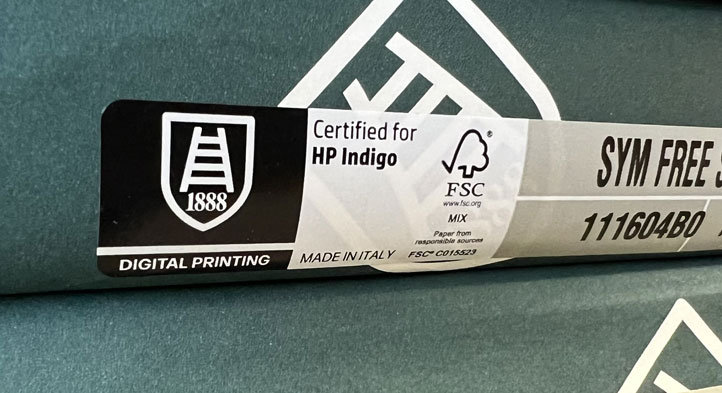
Recycled and FSC-certified papers can reduce environmental impact and support responsible sourcing.
Recycled materials may vary slightly in colour and texture. FSC certification confirms that material has been sourced through a responsible forestry supply chain.
Sustainability also involves efficient production, recycling paper waste, selecting appropriate quantities and reducing obsolete stock.
Cost and Budget
Heavier and specialist papers generally cost more and can increase delivery charges.
Coated stocks, premium finishes and lamination add value but should be selected according to the purpose of the publication.
A self-cover booklet, where the cover and pages use the same paper, can offer a cost-effective option for newsletters, programmes and information booklets.
Choosing Paper by Publication Type
- Novels and fiction: often 80–90 GSM uncoated paper.
- Educational books: commonly 100–130 GSM, depending on use and durability.
- Art and photography books: usually heavier coated paper for image quality.
- Manuals and cookbooks: medium-weight coated or uncoated paper depending on handling requirements.
- Marketing booklets: often medium-weight inner pages with a heavier laminated cover.
Conclusion
The right paper depends on content, audience, binding, budget and intended lifespan.
Consider how the publication should feel, how it will be handled and whether it is primarily text-led or image-led. A well-chosen stock improves both the reader's experience and the effectiveness of the finished product.